
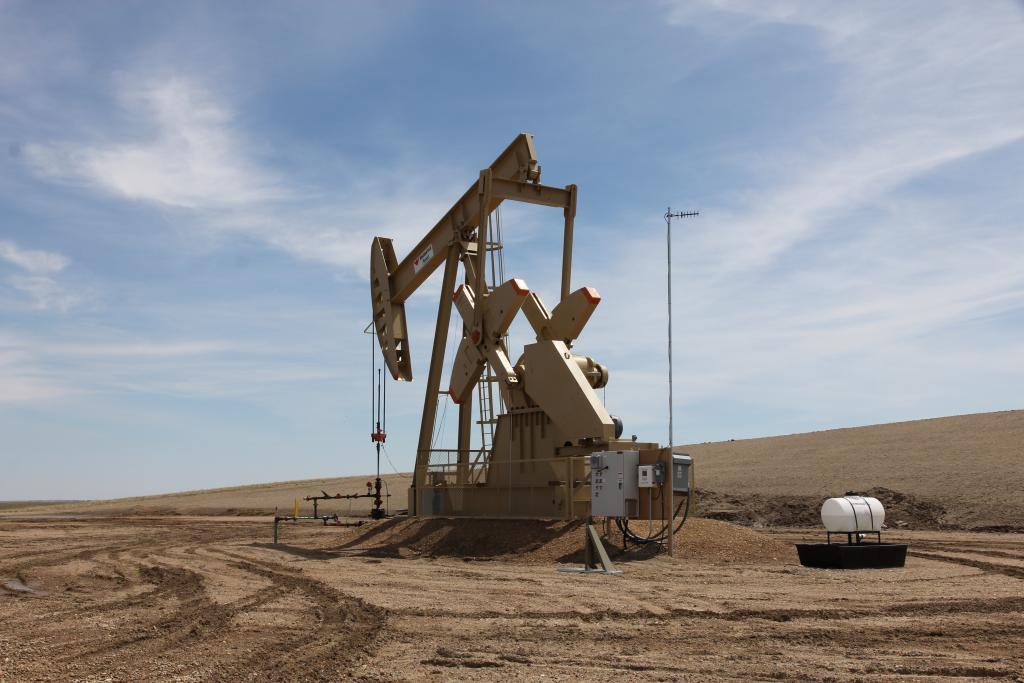
Periods of market uncertainty remind investors that stability is essential. Well-placed oil and gas investments can bring balance to a portfolio by generating steady income potential, offering some protection against inflation, and moving differently from traditional assets. With domestic production at record highs and energy demand remaining strong, exposure to U.S. oil and gas can help investors maintain consistent performance while staying aligned with long-term energy fundamentals.
How Steady Demand Helps Support Long-Term Results
Energy demand remains steady over time. Petroleum and natural gas continue to supply about three-quarters of total U.S. primary energy needs, roughly 38 percent from petroleum and 36 percent from natural gas. These numbers highlight how essential these resources are for transportation, power generation, manufacturing, and heating. Their steady role across key sectors supports the long-term viability and income potential of well-managed oil and gas projects.
Meanwhile, the U.S. is producing oil at record levels, driven largely by Texas and neighboring basins. The United States produced more energy than ever in 2024, including a record 13.2 million barrels per day of crude oil. The EIA’s October 2025 outlook also notes record production set in July 2025 and projects high output through 2026. These trends help support project pipelines, service capacity, and operator efficiency that investors value.
How Diversification and Inflation Sensitivity Work Together
Adding assets that behave differently from traditional holdings can help smooth portfolio performance over time. The CFA Institute notes that commodities have historically shown low correlation with stocks and bonds and can help offset the effects of inflation in certain market conditions.
Within this broader category, oil and gas investments offer exposure to tangible assets that continue to play a key role in meeting global energy needs. Their performance is shaped largely by supply, demand, and production trends rather than day-to-day movements in the stock or bond markets. This difference can make energy investments a practical way to diversify beyond traditional asset classes while staying connected to long-term economic fundamentals.
The CFA Institute also highlights that the historical relationship between stocks and bonds is not always consistent: there have been periods when both moved in the same direction, limiting diversification. In such times, adding real or alternative assets can help spread risk and enhance portfolio resilience. While every investment carries its own risks, measured energy allocation can provide balance, income potential, and a level of insulation from traditional market cycles.
Contact DW Energy
Want to learn more about oil & gas investing? Our expert team can provide you with more information or schedule a consultation to talk about diversifying your investment portfolio.
How Producing Assets Support Cash Flow
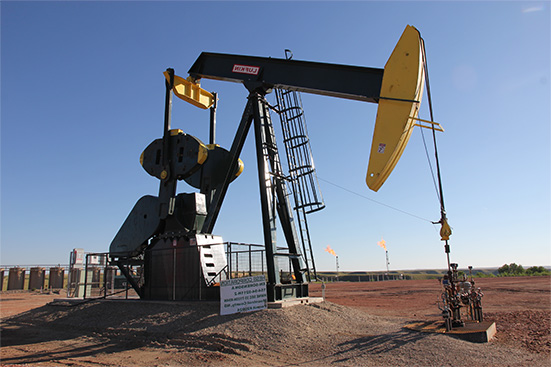
Direct participation in domestic oil and gas projects can give qualified investors access to cash flow tied to real production. Once wells are brought online, revenues are generated based on production volumes, realized prices, and operating costs. Unlike public equities or broad energy funds, these interests are connected to specific producing assets, managed by experienced operators.
Performance can vary depending on factors such as basin quality, decline rates, and operational efficiency, which is why careful project selection and experienced management matter. U.S. supply strength further supports this opportunity – crude oil and natural gas output remain near record levels, and American natural gas exports reached new highs in 2023, reflecting strong international demand for U.S. energy.
How Oil and Gas Tax Features Can Benefit Qualified Investors
Certain oil and gas investments may qualify for federal tax advantages under U.S. law. The Internal Revenue Code allows taxpayers who hold a working or operating interest in domestic oil and gas properties to deduct a portion of their intangible drilling and development costs (IDCs). These expenses, such as labor, fuel, and drilling services, can often be deducted in the year they are incurred or amortized over time, depending on the project and the taxpayer’s election under Section 263(c). The specific rules vary, and investors should always consult their tax professional for guidance on eligibility and application.
Another potential benefit is percentage depletion, which allows eligible investors to deduct a percentage of gross income from producing wells. The standard rate is generally 15 percent and may be adjusted annually for marginal properties, as outlined in the IRS’s published bulletins.
While these provisions don’t guarantee a specific outcome, they can improve after-tax efficiency when applicable. For qualified investors, these potential advantages add to the appeal of oil and gas as a tangible asset class that can support diversification and long-term value in a well-constructed portfolio.
Ways To Approach Energy Investing Thoughtfully
Keep it small and intentional
Start with a measured allocation that fits your risk profile. Choose a size that allows you to stay steady through normal shifts in commodity prices.
Focus on quality basins and experienced partners
Look for projects in proven plays with strong operators. Texas-anchored areas like the Eagle Ford and Woodbine, along with Oklahoma’s SCOOP and STACK plays and North Dakota’s Bakken, continue to show solid activity and efficiency gains. These improvements can support consistent project execution across a range of developments.
Know the drivers of stability
Production mix, decline rates, hedging practices, operating costs, and midstream access all influence variability. Ask how projects estimate commodity prices, what hedges are in place, and how operating partners manage costs and service contracts.
Plan for taxes early
If your investment qualifies for deductions such as IDCs or depletion, it’s best to coordinate with your CPA before year-end. Proper timing and documentation can make a meaningful difference in how they’re applied for both regular tax and AMT purposes.
Maintain transparency and communication
Consistent updates and clear reporting help build confidence and support steady results. Work with partners who provide regular operational updates, such as well schedules, production summaries, and project milestones, in a format that’s easy to review and track.
Why qualified investors choose DW Energy
DW Energy Group is a non-operating oil and gas exploration company that partners with leading operators and focuses on direct participation in U.S. projects for qualified and approved investors. Since 2008, DW has specialized in finding, developing, and managing domestic opportunities, backed by comprehensive due diligence and consistent communication with partners.
Our approach reflects what many investors look for in a stable, transparent partnership. We provide direct access to tangible U.S. energy assets and emphasize informed project evaluation backed by strong industry expertise. Partners receive consistent updates that track each well from drilling to production, helping them stay informed at every stage. We also prioritize tax-efficient structures and thorough documentation, allowing you to plan with confidence.
Ready to explore a measured energy allocation for stability
Qualified and approved investors who want to add stability and long-term balance to their portfolios can explore how oil and gas investments fit within a diversified strategy. At DW Energy Group, we focus on transparency, due diligence, and consistent communication, so every partner understands how their investment works at each stage.
We invite you to learn more about our evaluation and reporting process and see how we manage every opportunity with clarity and integrity. Visit our website to get started or connect with us to discuss current opportunities.
Contact dw energy
Sources
“U.S. energy facts explained,” U.S. Energy Information Administration,
https://www.eia.gov/energyexplained/us-energy-facts/data-and-statistics.php
“In 2024, the United States produced more energy than ever before,” U.S. Energy Information Administration, https://www.eia.gov/todayinenergy/detail.php?id=65445
“Short-Term Energy Outlook,” U.S. Energy Information Administration,
https://www.eia.gov/outlooks/steo/
“Introduction to Commodities and Commodity Derivatives,” CFA Institute,
https://www.cfainstitute.org/insights/professional-learning/refresher-readings/2025/introduction-commodities-commodity-derivatives
“The Performance of the 60/40 Portfolio: A Historical Perspective,” CFA Institute, https://rpc.cfainstitute.org/sites/default/files/docs/research-reports/monash-report-1_performance-of-the-6040_online.pdf
“The United States has been an annual net total energy exporter since 2019,” U.S. Energy Information Administration, https://www.eia.gov/energyexplained/us-energy-facts/imports-and-exports.php
“Internal Revenue Bulletin 2021-19 – Percentage Depletion for Marginal Properties,” Internal Revenue Service, https://www.irs.gov/irb/2021-19_IRB
“Bulletin 2023–30 – Percentage Depletion Guidance,” Internal Revenue Service,
https://www.irs.gov/pub/irs-irbs/irb23-30.pdf
“Section 263(c) and Intangible Drilling Costs – Private Letter Rulings and Guidance,” Internal Revenue Service, https://www.irs.gov/pub/irs-wd/201825017.pdf and https://www.irs.gov/pub/irs-wd/1210011.pdf
“Publication 551 – Basis of Assets,” Internal Revenue Service,
https://www.irs.gov/publications/p551
“Use of Natural Gas,” U.S. Energy Information Administration,
https://www.eia.gov/energyexplained/natural-gas/use-of-natural-gas.php