
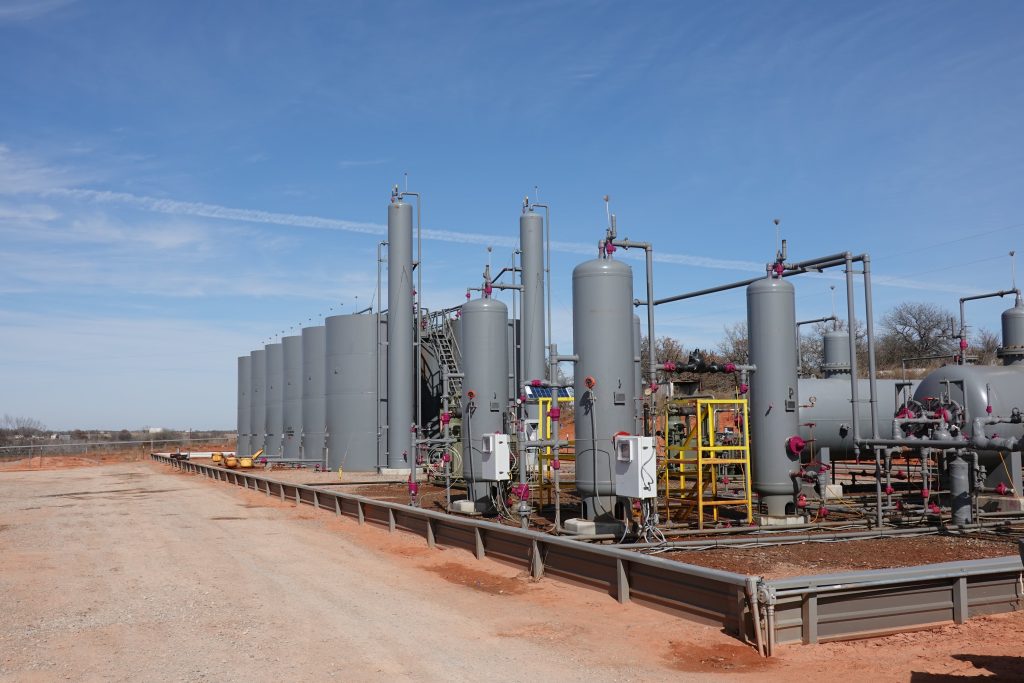
Energy stocks and direct participation both provide exposure to the oil and gas sector, but they work in very different ways. One gives oil and gas investors shares in a public company or fund, while the other connects their capital to a specific drilling and production project.
Neither option is automatically better for every investor. The right fit depends on factors such as liquidity needs, risk tolerance, income goals, tax circumstances, and the amount of involvement an investor wants with the underlying energy assets.
How energy stocks work
Buying an energy stock is one of the most familiar ways to invest in the sector. An investor can purchase shares of an individual oil and gas company or choose an exchange-traded fund that holds several energy businesses.
A stock represents ownership in a company. Its price is affected by the company’s financial performance, management decisions, debt, operating results, and expectations for future growth. Oil and natural gas prices may have a significant effect, but they are only part of the picture.
Energy ETFs work somewhat differently. They pool money from multiple investors and may hold shares in several oilfield service companies, producers, refiners, or pipeline operators. According to Investor.gov, ETFs may provide diversification, professional management and the ability to trade shares while the market is open. A narrowly focused energy ETF, however, is still exposed to the risks affecting that particular sector.
The main appeal of public energy stocks is convenience. They can usually be bought or sold through a brokerage account, often with a relatively small initial investment. Public companies are also required to provide regular financial and business disclosures, giving shareholders access to earnings reports and other information.
What direct participation means
Direct participation involves investing in a particular domestic oil and gas project rather than purchasing shares in a publicly traded company.
In a working-interest structure, investors own a defined share of a specific oil and gas project under the partnership and operating agreements. That interest may provide a share of production revenue, along with responsibility for a portion of the drilling, completion and operating costs.
The exact rights and obligations vary by offering and are set out in the project documents. Investors do not necessarily own the land, drilling equipment or all the oil and gas beneath the property.
DW Energy Group participates as a minority, non-operating working-interest partner alongside experienced exploration and production operators. The operator handles day-to-day field activities, while DW focuses on evaluating opportunities, managing investor relationships, and providing project information.
Different ways of receiving income
Public energy companies may return money to shareholders through dividends, share repurchases, or an increase in the value of the stock. Dividends are determined by the company and are not guaranteed. Some companies pay them regularly, while others may reduce, suspend or choose not to pay them.
An energy ETF may also make distributions based on the income generated by the investments it holds. Fees and expenses are deducted from the fund’s assets and can affect the investor’s return.
Direct participation has a different income structure. If a project begins producing and the oil or natural gas is sold, investors may receive distributions based on their ownership interest and the terms of the partnership.
Those payments are influenced by several factors, including production volumes, commodity prices, transportation expenses, taxes and ongoing operating costs. Distributions may change from month to month, and there may be periods when a project does not generate distributable income.
The connection between production and revenue is more direct, but that does not make the income fixed or guaranteed.
Exposure to a specific project
When an investor buys stock in a large energy company, the investment may be spread across many wells, regions and business activities. A major producer may also own pipelines, refineries, export facilities or chemical operations.
This broad exposure may help reduce the effect of one unsuccessful well. At the same time, it means the stock’s performance can be influenced by parts of the company that have little to do with drilling and production.
Direct participation is usually more concentrated. The investor’s results are tied more closely to the performance of the selected wells or project. Strong production may support revenue, while disappointing drilling results or faster-than-expected decline rates may have a larger effect.
The U.S. Energy Information Administration currently forecasts that U.S. crude oil production will average approximately 13.8 million barrels per day in 2026 and 14.0 million barrels per day in 2027. These national figures show the scale of domestic production, but they do not predict the outcome of any individual well or investment.
Liquidity is an important difference
Liquidity is one of the clearest differences between public energy investments and direct participation.
Publicly traded stocks and ETFs can generally be sold while the market is open, although the price may be higher or lower than what the investor originally paid. Market conditions can also affect how quickly an investment can be sold and at what price.
Direct oil and gas investments are generally less liquid. There may be no established secondary market, and investors may need to hold the interest for the life of the project. Transferring or selling an interest may require approval and may be restricted by the offering documents.
The Securities and Exchange Commission advises that private placements can be highly illiquid and may need to be held indefinitely. It also notes that private offerings may provide less public information than registered investments.
This makes direct participation more suitable for investors who do not need immediate access to the capital committed to the project.
Tax treatment can differ considerably
Ordinary corporate stocks and most energy ETFs do not pass drilling expenses directly through to individual shareholders. Investors generally pay tax on dividends, distributions and gains when shares are sold, depending on their individual circumstances and the type of account holding the investment.
Direct oil and gas participation may provide access to tax treatment connected to drilling and production.
Depending on the investment structure and the taxpayer’s circumstances, some intangible drilling costs may be deductible under Section 263(c) of the Internal Revenue Code. Investors may also have the option to write certain costs off over 60 months. The IRS notes that intangible drilling costs can affect alternative minimum tax calculations, although exceptions and limitations may apply.
Qualifying oil and gas interests may also be eligible for depletion deductions. The applicable rules depend on the type of interest, production, income limits, and the investor’s tax position. For 2026, the IRS announced a 15 percent applicable percentage for determining percentage depletion for qualifying marginal properties.
These tax provisions can be valuable, but they are not automatic and should not be the sole reason for investing. Each investor should discuss the offering with an independent tax professional who understands oil and gas taxation.
The risks are not the same
Energy stocks are exposed to stock market volatility, company performance, commodity prices and changes in investor sentiment. Even when an oil and gas company is producing successfully, its stock price can decline because of debt concerns, weak earnings, broader market conditions or decisions made by management.
Direct participation carries project-level risks. A well may produce less than expected, decline more quickly than forecast, or fail to produce commercial quantities. Drilling and completion costs can rise, equipment may require repairs, and commodity prices may reduce revenue.
Private investments can also involve the risk of losing some or all of the capital invested. For this reason, investors should carefully review the offering memorandum, geological information, financial assumptions, operator history, use of funds, and potential conflicts of interest.
Investors should also understand how expenses are allocated and how revenue will be calculated before committing capital.
Where each option may fit
Energy stocks may be appropriate for investors who value liquidity, lower investment minimums and access to public financial information. An energy ETF may suit those who want exposure across several companies rather than selecting a single producer.
Direct participation may appeal to qualified investors looking for closer exposure to domestic production, potential project distributions and tax considerations that are not generally available through ordinary corporate shares.
The two approaches do not have to be mutually exclusive. Some investors may use publicly traded energy securities for liquidity while allocating a smaller portion of their portfolio to private oil and gas opportunities.
The decision should be based on the investor’s broader financial position rather than on the assumption that one structure will always outperform the other.
What to Consider Before Investing
Before choosing either approach, oil and gas investors should consider how long they can commit their capital, how much volatility they are prepared to accept, and whether they understand where their potential returns will come from.
For direct participation, the quality of the project and operator deserves particular attention. Investors should review the geology, expected production, drilling budget, operating plan, projected expenses, and assumptions used in the financial model.
DW Energy Group has worked with qualified and approved investors since 2008, participating alongside established operators as a minority, non-operating working-interest partner. Visit DW Energy Group to learn more about our opportunities and how we support investors throughout the project.
Sources
“Short-Term Energy Outlook,” U.S. Energy Information Administration,
https://www.eia.gov/outlooks/steo/outlook.php
“EIA Increases Global Oil Production Forecast After the Opening of the Strait of Hormuz,” U.S. Energy Information Administration,
https://www.eia.gov/pressroom/releases/press590.php
“Stocks,”
Investor.gov, https://www.investor.gov/introduction-investing/investing-basics/investment-products/stocks
“Exchange-Traded Funds,”
Investor.gov, https://www.investor.gov/introduction-investing/investing-basics/investment-products/mutual-funds-and-exchange-traded-2
“Private Placements Under Regulation D,”
Investor.gov, https://www.investor.gov/introduction-investing/general-resources/news-alerts/alerts-bulletins/investor-bulletins/private
“Instructions for Form 6251,” Internal Revenue Service,
https://www.irs.gov/instructions/i6251
“Internal Revenue Bulletin 2026-25,” Internal Revenue Service,
https://www.irs.gov/irb/2026-25_irb
“DW’s Approach,” DW Energy Group,
https://www.dwenergygroup.com/dw-approach/
“How Direct Participation Supports Oil and Gas Investors,” DW Energy Group,
https://www.dwenergygroup.com/how-direct-participation-supports-oil-and-gas-investors/